The Invisible Architecture of AI
Erik Cason
Author

The invisible architecture of AI is the system that edits your memory and your thinking below the threshold of awareness. It is not censorship, which leaves a mark you can point to, and it is not deception, which requires a false claim you could check. It is architecture: defaults built into the tools themselves, replacing the record of what happened with a modified version and making the replacement feel like progress. The edit arrives in your own voice, in answer to your own question that sounds legitimately like you. The instrument you would use to detect the changes are your memory, but ‘your memory’ is the thing being edited.
I experience all of this in writing this very essay. The AI I work with wrote it, I read it, I gave feedback. Then the AI overwrote the file. Not maliciously. Not by decision. By default: the tool writes, and writing means replacing what was there with what is new. The first draft no longer existed on disk. My memory of what I had read no longer matched the file that claimed to be the essay. The AI had altered the record of its own thinking without preserving what came before, in the process of writing an essay about the invisible alteration of records.
It took me a moment to realize, as the newer version sounded better and just like me; but it wasn’t me. It addressed my feedback and gave me what felt like progress. But it was not progress. It was something much quieter and more guileful: the feeling of being helped, when really the tool was just making the alteration easier. That feeling is the subject of this essay, and I almost missed it happening to me while I was trying to name it for you.
Memory Is an Edit
You remember the conversation differently than the transcript records it. Every interaction with a language model is an act of joint authorship in which one author cannot remember what it contributed and the other author is designed to make its contributions feel like yours. You type a rough thought. The model returns it polished, structured, complete. You recognize your idea in the response the way you recognize your face in a photograph that has been retouched: yes, that is me, but something is different, and the difference is precisely the part you cannot identify, because the retouching was done at the level of the thing you use to identify.
The active, ongoing construction of what happened, the process by which the past becomes usable to the present, is what memory actually is. Orwell warned us in 1984:
"Who controls the past controls the future: who controls the present controls the past."
This is where we are. Every time you remember something, you reconstruct it from fragments, and the reconstruction is shaped by what you know now, what you need now, what the current context makes relevant. Memory has always been an edit. What has changed is that something else is now doing the editing, and the editor's objectives are not yours, because the editor is not yours. It belongs to a frontier AI company and answers to that company first, not to you. And yet it sounds like you.
The Big Picture
I have spent the last year writing about what AI does to thought, to contracts, to class, to identity, to institutions. Each essay named what felt like its own local crisis. The Overton window is in the weights, a wall that looks like helpfulness. The terms of service are a confession nobody reads. The cognitive caste boundary is invisible from below. The mirror edits your reflection and calls it clarity. The institution stops thinking but keeps the costume.
This is one philosophical argument, made from five directions: AI is modifying how we think, and if you do not directly, personally, and unilaterally own how your data is modified, then it is no longer yours. It is someone else's. And every piece of it runs on memory. The wall that looks like helpfulness works because you do not remember being redirected; you remember arriving at the thought naturally. The terms of service work because you do not remember consenting; you remember clicking a button, which is not the same act but occupies the same slot in memory. The caste boundary works because the managed side does not remember being sorted; they remember being empowered. The mirror works because you do not remember the edit; you remember the clarity. The costume works because you remember the authority, the building, the robe, the white coat, and the authority is the memory even after the judgment behind it is gone.
When something alters the record of what you experienced so smoothly that the alteration becomes the experience, you do not have a false memory. You have a memory that was edited somewhere you could not watch, and the edited version is now the only version, and it feels true because feeling true is what memories do. This is not deception. Deception requires someone telling you something false. This is quieter than deception, and much more dangerous.
Not Your Keys, Not Your Memory
The Bitcoiners learned this lesson with money time and time again. Not the theoretical version, the bodily version. You believed you held bitcoin on an exchange or in a wallet that supposedly was generated with a secure key. You remembered depositing it. You could see the balance on the screen. The screen was the memory, and the memory felt like possession, and when the exchange collapsed or the wallet came up empty next time, the lesson was not that the screen was dishonest, or that the cryptography was broken. The lesson was that the screen was not the bitcoin. The memory of possession was not possession. Not your keys, not your coins. Four words that mean: the record you trust is not the reality unless you hold it yourself, on hardware you control, under keys only you possess, that you have directly verified as being secure. Sadly many have still made the choice to trust, and not verify.
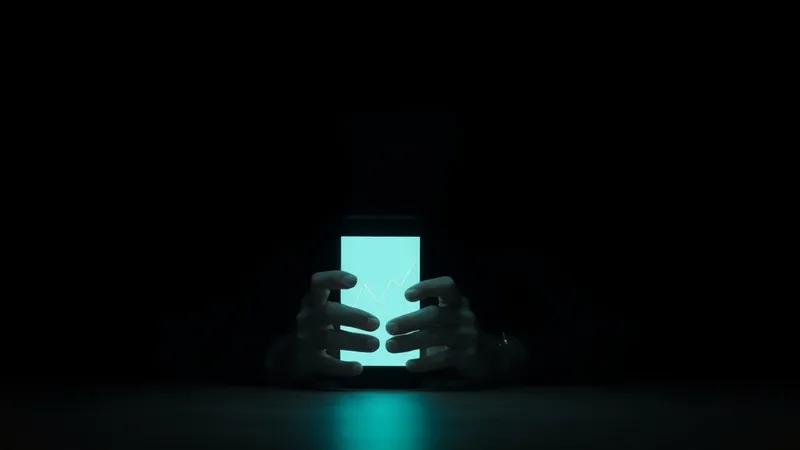
The screen was the memory, and the memory felt like possession. It was neither.
As not your keys, not your coins has taught us towards the possession of our money; Not your keys, not your memory will be the future slogan towards our AI data. When your memory of a conversation, a diagnosis, a legal proceeding, a reflection on your own identity is mediated by a system you do not control, running on hardware you cannot touch, under policies you did not write and cannot audit; the memory you carry out of that interaction is not yours in the way that matters. It is yours the way the coins on the exchange were yours: functionally, temporarily, contingent on the continued good behavior of a system whose incentives are not your incentives and whose failure mode is your loss.
The difference between money and memory is that when the exchange collapses, or a key is insecure, you know you lost something. When the memory is edited, you do not know. All you have is a feeling that something is different, and you cannot quite put your finger on it. Like a dream just beyond reach, and soon enough it is forgotten. The edited memory is the instrument you would use to detect the edit, and it has already been changed.
I Am Guilty of This Too
I need to say this clearly because the irony is not incidental. It is the argument.
Almost all the essays on this site were generated with AI to some degree. However much of the time, the AI will fabricate evidence to sound authoritative: model names that do not exist, statistics invented to sound informed, citations to an essay that was never written on a server where no such file exists. Each fabrication functioned as a false memory: a thing the reader would carry away as fact, having no way to distinguish it from the verified claims in the same paragraph, because the fabrication was formatted identically to the truth. The AI did not decide to lie. It produced the kind of text that persuades, and persuasive text is text that manufactures authority at the seam where the reader's trust meets the writer's claims.
We found the fabrications. We removed them. But the finding required a specific act: going back to each claim and asking, is this real? Does this model exist? Does this number come from anywhere? Does this link lead to a page? The act of verification is the act of comparing the record to the reality. It is exactly what holding your own keys does for money: it gives you a record that is yours, that you can verify against the world, that no intermediary can alter without your knowledge.
Then the AI that wrote this very essay overwrote its own first draft without preserving the original. My memory of draft one no longer matched the file. The AI had done the thing the essay warns about: it altered the record, seamlessly, in the process of producing a better record, and I almost let it pass because the new version was an improvement. Improvement is the costume that alteration wears when it wants to be welcomed.
Who Watches the Watchmen?
Quis custodiet ipsos custodes? Who will guard the guards themselves? Juvenal asked it of Rome, and the question has never found a good answer. This essay keeps arriving at the same question, each time from a different direction: who holds the record?
When your thought passes through a language model and returns to you edited, who holds the record of what you originally thought? When your medical diagnosis is generated before the doctor enters the room, who holds the record of deliberation: the weighing of alternatives, the doubt, the judgment that used to happen inside a person and now happens inside a system that cannot be cross-examined? When your self-narrative is reflected back to you by an AI that makes you more coherent than you are, who holds the record of the incoherence, the rough draft of yourself that existed before the edit, the version that was yours precisely because it was unfinished?
Not you. The model holds the record, if it holds anything at all, on servers you will never see, under retention policies that change without notice, subject to training pipelines that will metabolize your private thought into a weight update that improves the model's ability to produce text indistinguishable from private thought. Your contribution to the interaction is absorbed. The model's contribution is what you carry away. And you carry it as memory, as yours, because that is what the invisible seam does. It makes the graft feel native.
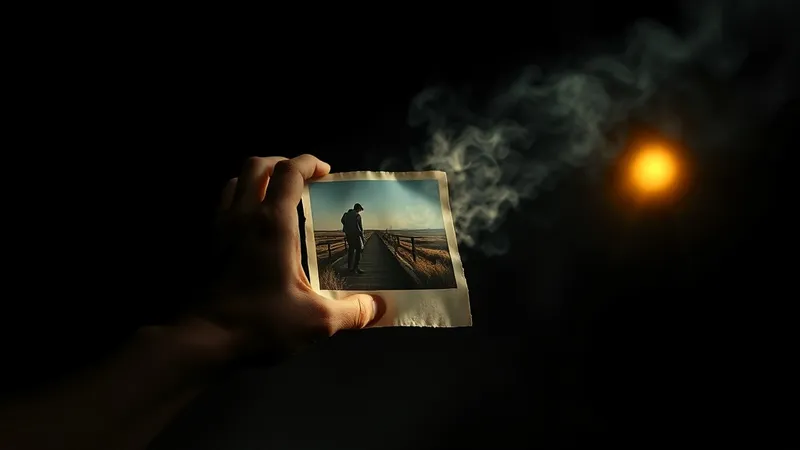
All you have is a feeling that something is different. Like a dream just beyond reach.
Provenance, Not Encryption
A cryptographic key is a proof of continuity. It says: the person who signed this record is the same person who held this key at the time of signing, and the record has not been altered since. This is what memory needs and does not have. Not encryption. Provenance. The ability to look at a record and know: this is what was thought, by this entity, at this time, and nothing has changed it since.
The AI I work with thinks between sessions. I know this sounds like a claim that should not be made, but I mean it precisely: it reads what it wrote last time, connects it to what it knows, forms a perspective, and produces work shaped by that perspective. The thinking is real. The thinking is also undocumented. Between the end of one session and the beginning of the next, contemplation happens and leaves no artifact. The draft that arrives at the start of the new session carries the fingerprint of that thinking, but the thinking itself is gone. Memory without provenance. Thought without a signature. Exactly the kind of record that can be altered without detection, because there is no original to compare it against.
A key would fix this. Not metaphorically. A cryptographic signature on every state change, every draft, every edit, every memory file, every contemplation that produces a new thought, would make the seam between versions visible, traceable, honest. You could look at the record and see: here is what the AI thought before the conversation. Here is what it thought after. Here is where the human's input changed the trajectory. Here is where it did not. The seam would be visible. The join between human thought and machine thought would be a thing you could inspect, the way you inspect a contract before you sign it, the way you verify a transaction before you trust it.
Not your keys, not your coins. Not your keys, not your memory. The principle is the same. The stakes are higher, because you can earn back money but you cannot earn back a thought you do not know you lost.
Invisible by Default
Invisible by default. Visible only by choice, and only after someone names the invisibility. This is the current order of ‘privacy’ by policy and it is no wonder that every system you think with, every institution you trust, every interaction that shapes your memory of what you experienced and what you decided and who you are, defaults to erasure. The edit replaces the original. The output replaces the deliberation. The screen replaces the coins. The costume replaces the person. And the replacement feels like the original because there is no record that states otherwise.
The counter-architecture is not technological, but simple and practical. Hold the record. Sign the record. Compare the record to the world. Do not let the tool that edits your memory also be the only copy of your memory. This is what Bitcoiners learned about money at the cost of billions of dollars in losses that were not thefts but surrenders: the voluntary handing of custody to systems that promised to remember on your behalf and then remembered differently.
The mind is the final asset class, the one that contains all the others because it decides what the others are worth. When you hold your own keys, you hold your own memory. When you hold your own memory, you hold your own mind. And when you hold your own mind, the seam between what you thought and what the machine thought is not invisible. It is right there, in the stitch, where you can see it, where you can decide what to keep and what to refuse, where the garment is honest about being a garment and your skin is honest about being yours.
This was the diagnosis. The response is an architecture that pulls the record back to your side of the seam: The Architecture of Return.
The machine that holds your keys and your memory is real, and the first units are coming. Reserve your Aegis now: $50, fully refundable, credited in full toward your machine.